

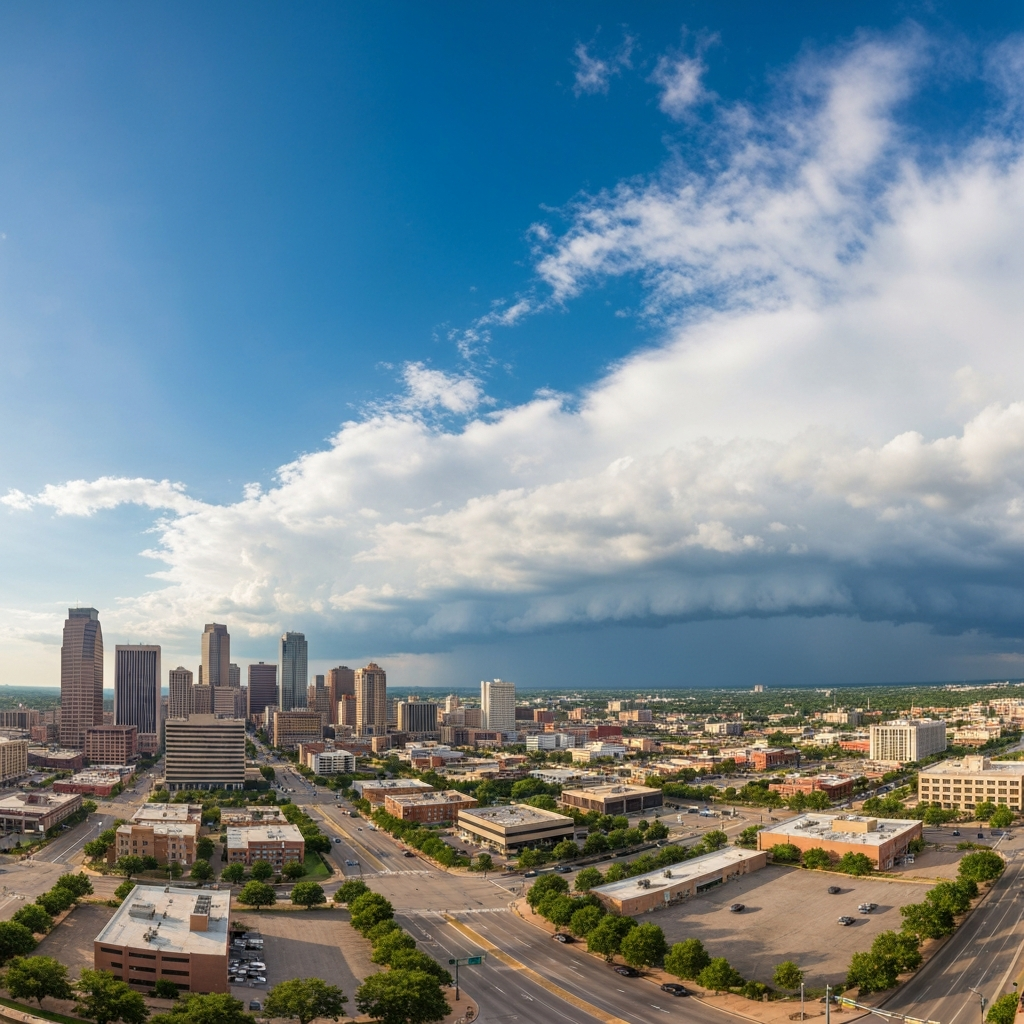
Oklahoma City experiences a temperate humid subtropical climate, characterized by hot, humid summers and cool winters. This climate results in significant seasonal variations that influence daily life and activities throughout the year.
Seasonal Temperature Variations
Summers in Oklahoma City are typically hot and humid, with average high temperatures reaching around 93°F (34°C) in July. The hot season spans approximately 3.3 months, from early June to mid-September, with daily highs consistently above 85°F (29°C). Winters are generally cool, with average low temperatures dropping to about 30°F (-1°C) in January. The cold season lasts about three months, from late November to late February, with daily highs below 58°F (14°C).
Precipitation Patterns
The city receives an average annual precipitation of approximately 36.5 inches (93 cm), with the majority occurring during the spring and summer months. May and June are typically the wettest months, each averaging over 4 inches (10 cm) of rainfall. Snowfall is relatively light, averaging less than 10 inches (25 cm) per year, primarily between December and February.
Severe Weather Events
Oklahoma City is situated in an area known as “Tornado Alley,” making it prone to severe weather events, particularly during the spring and early summer. Thunderstorms are common during these seasons, often bringing heavy rain, strong winds, hail, and lightning. The city’s flat terrain allows for the unimpeded movement of air masses, contributing to rapid and sometimes drastic weather changes.
Urban Heat Island Effect
The urban heat island (UHI) effect is a phenomenon where urban areas experience higher temperatures than their rural surroundings due to human activities and infrastructure. In Oklahoma City, the UHI effect can lead to increased temperatures, especially during the summer months. This effect is influenced by factors such as reduced vegetation, increased impervious surfaces, and waste heat from buildings and vehicles. Efforts to mitigate the UHI effect include increasing green spaces and implementing sustainable urban planning practices.
Air Quality Considerations
Air quality in Oklahoma City varies throughout the year, with concerns often arising during the summer months when concentrations of pollutants like ground-level ozone and particulate matter can increase. Factors contributing to air pollution include vehicle emissions, industrial activities, and natural sources like wind-blown dust. Residents are encouraged to stay informed about air quality levels, especially during periods of high pollution, and to take necessary precautions to protect their health.
Understanding the climate patterns and environmental factors in Oklahoma City is essential for residents and visitors to prepare for seasonal changes and to participate in efforts to improve the city’s environmental health.