

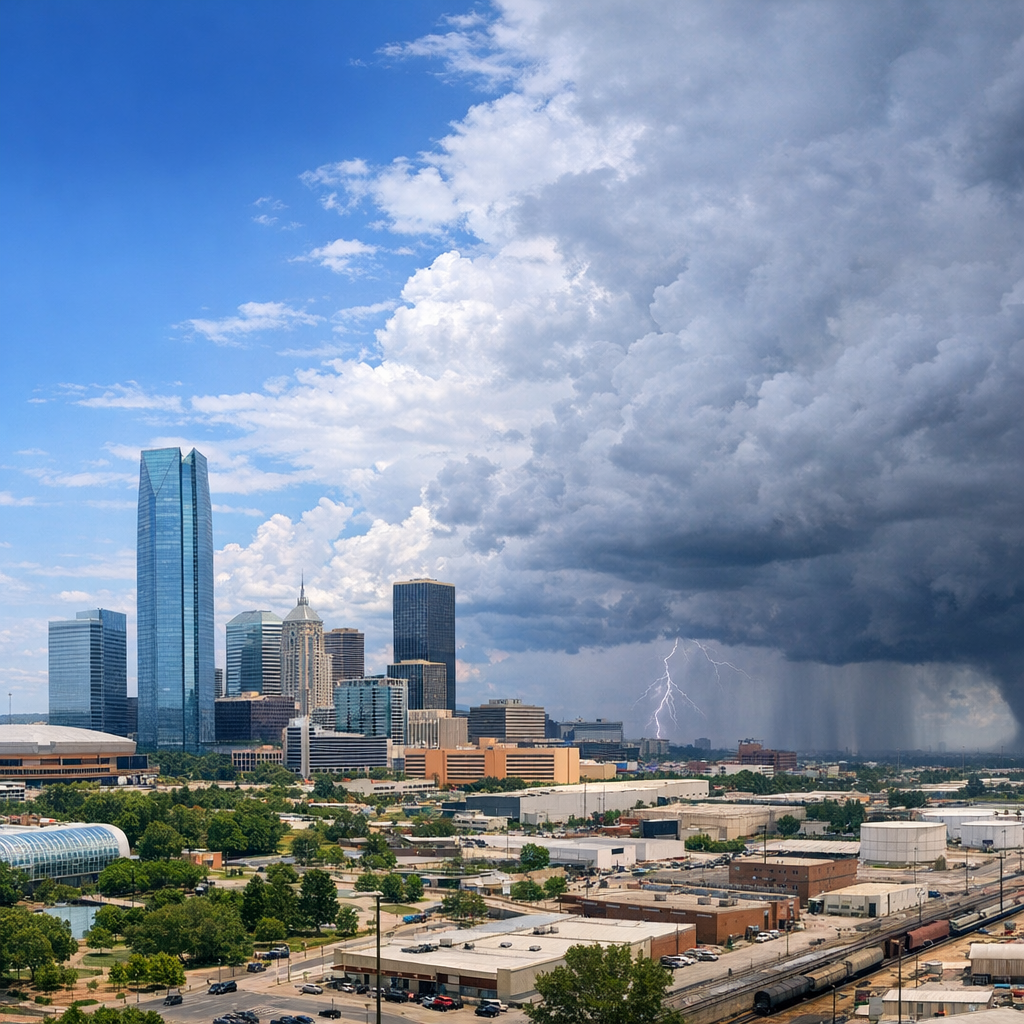
Oklahoma City experiences a temperate humid subtropical climate, characterized by hot, humid summers and cool winters. This climate results in significant seasonal variations that influence both the environment and daily life.
Seasonal Temperature Variations
Throughout the year, temperatures in Oklahoma City fluctuate considerably. The average annual temperature is approximately 61.4°F (16.3°C). During summer months, particularly July, average high temperatures reach around 93°F (34°C), while winter months, especially January, see average lows near 31.6°F (-0.2°C). These variations necessitate adaptability in daily activities and preparedness for sudden weather changes.
Precipitation Patterns
Annual precipitation averages about 36.52 inches (92.8 cm), with May typically being the wettest month, receiving around 5.44 inches (13.82 cm) of rainfall. Conversely, January is usually the driest month, averaging 1.28 inches (3.25 cm) of precipitation. Snowfall is relatively light, averaging less than 10 inches (25.4 cm) per year, primarily occurring between December and February.
Severe Weather Events
Oklahoma City is situated in an area known as “Tornado Alley,” making it prone to severe weather events, especially during spring and early summer. Thunderstorms are common during these seasons, often bringing heavy rain, strong winds, hail, and lightning. The city’s flat topography allows weather systems to move unhindered, contributing to rapid weather changes and the development of severe storms.
Environmental Considerations
The city’s climate also impacts environmental factors such as air quality. During hot summer months, increased temperatures can lead to higher concentrations of ground-level ozone, affecting respiratory health. Additionally, urban heat islands—areas with higher temperatures due to human activities—can exacerbate heat-related issues. Efforts to monitor and mitigate these effects are ongoing to ensure a healthier environment for residents.
Understanding these climatic patterns is essential for residents and visitors alike to prepare for and adapt to the diverse weather conditions experienced in Oklahoma City throughout the year.