

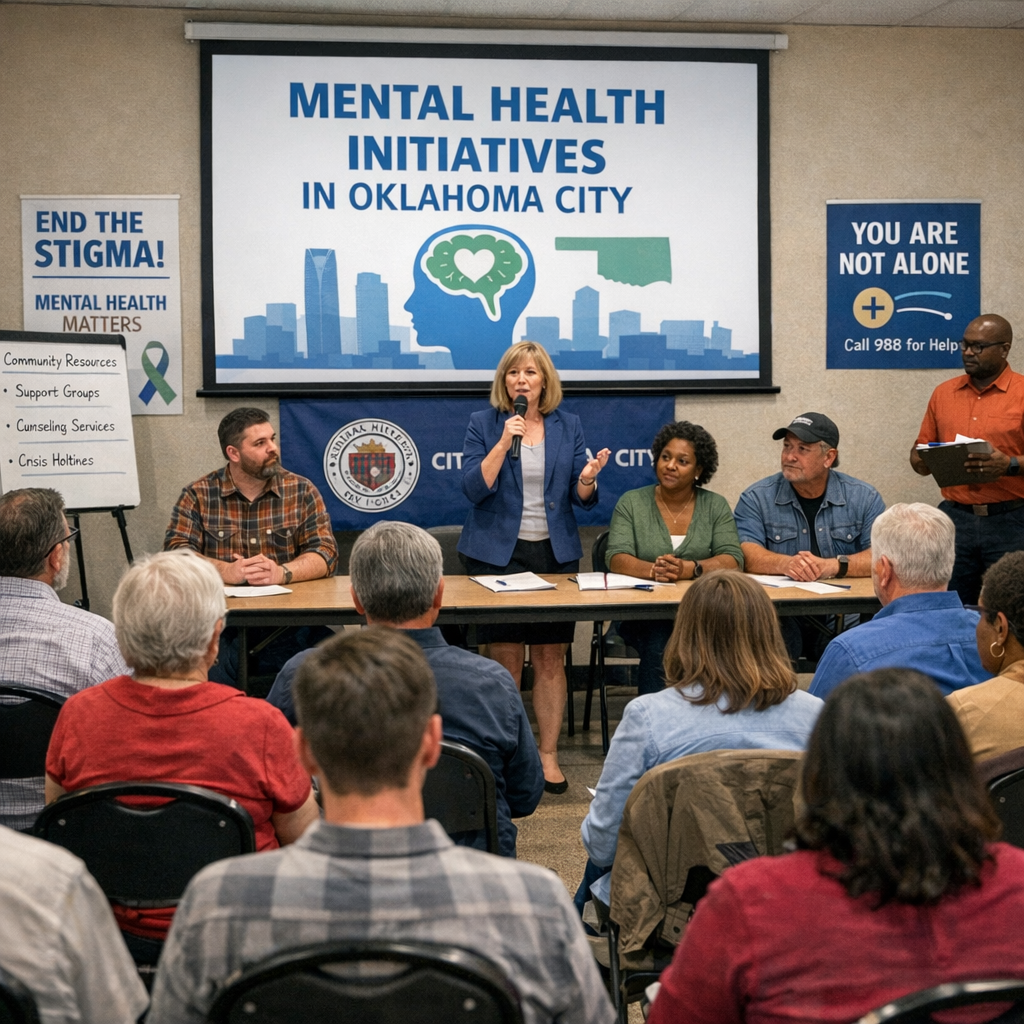
Oklahoma City is facing substantial challenges in its behavioral health system, as highlighted by a recent comprehensive assessment conducted by the Healthy Minds Policy Initiative. The study reveals critical issues, including a shortage of intensive services for individuals with serious mental illnesses, insufficient support for children and youth, and an overreliance on emergency departments for mental health crises.
Key Findings from the Assessment
The assessment underscores several pressing concerns:
- Structural Barriers to Care: High-risk areas for mental health issues often coincide with limited access to safety-net mental health providers. Additionally, the city’s infrastructure presents challenges, with 38% of schools located within two-thirds of a mile from alcohol outlets, while about a third are more than two miles from the nearest public park.
- Inappropriate Care Settings: There is a notable overuse of emergency rooms for mental health crises, with behavioral health-related ER visits among individuals in the safety-net system increasing by approximately 56% between 2019 and 2024. In contrast, visits to urgent recovery or crisis centers have remained steady.
- Gaps in Community-Based Services: The absence of robust community alternatives leads to cycles of homelessness, ER visits, and interactions with the criminal justice system for those with complex behavioral health needs. In 2024, only about 31% of Oklahoma City residents estimated to have serious mental illness were served in the state-funded behavioral health system.
- Children and Youth Services: The number of children receiving outpatient care in the state-funded system declined by about 25% from 2019 to 2024, while youth ER visits increased by approximately 19% during the same period. Moreover, only two of the city’s five school districts receive state funding for preventive mental health programs.
- Basic Needs and Housing: Nearly half of renters spend over 30% of their income on rent, and about 18% of the city’s population resides in areas with inadequate food access, exacerbating mental health challenges.
Community Initiatives and Responses
In response to these challenges, Oklahoma City has launched several initiatives:
- Key to Home Partnership: This collaboration of over 40 agencies aims to prevent and end homelessness. In 2023, the partnership set a goal to pair housing with wraparound services to house 500 people by the end of 2025, aiming to reduce the unsheltered population by 75%.
- Continuum of Care Grants: The city invests over $3.5 million annually in grant funds to local social service groups managing programs that address homelessness, integrating health services, job training, and assistance for domestic violence victims.
- Strong Neighborhoods Initiative (SNI): This program leverages public investment to revitalize declining neighborhoods, aiming to reduce crime and enhance residents’ sense of safety. Current and former target areas include Capitol Hill, Capitol View, Classen Ten Penn, Classen’s North Highland Parked, Culbertson’s East Highland, and Metro Park.
Looking Ahead
Addressing the behavioral health crisis in Oklahoma City requires a multifaceted approach, combining strategic investments, policy reforms, and community engagement. The findings from the Healthy Minds Policy Initiative’s assessment serve as a roadmap for stakeholders to implement evidence-based interventions, aiming to create a more accessible and effective behavioral health system for all residents.
Community members are encouraged to participate in local initiatives, provide feedback to policymakers, and support organizations working towards improving mental health services in the city. Through collective effort and sustained commitment, Oklahoma City can make significant strides in addressing its behavioral health challenges.