

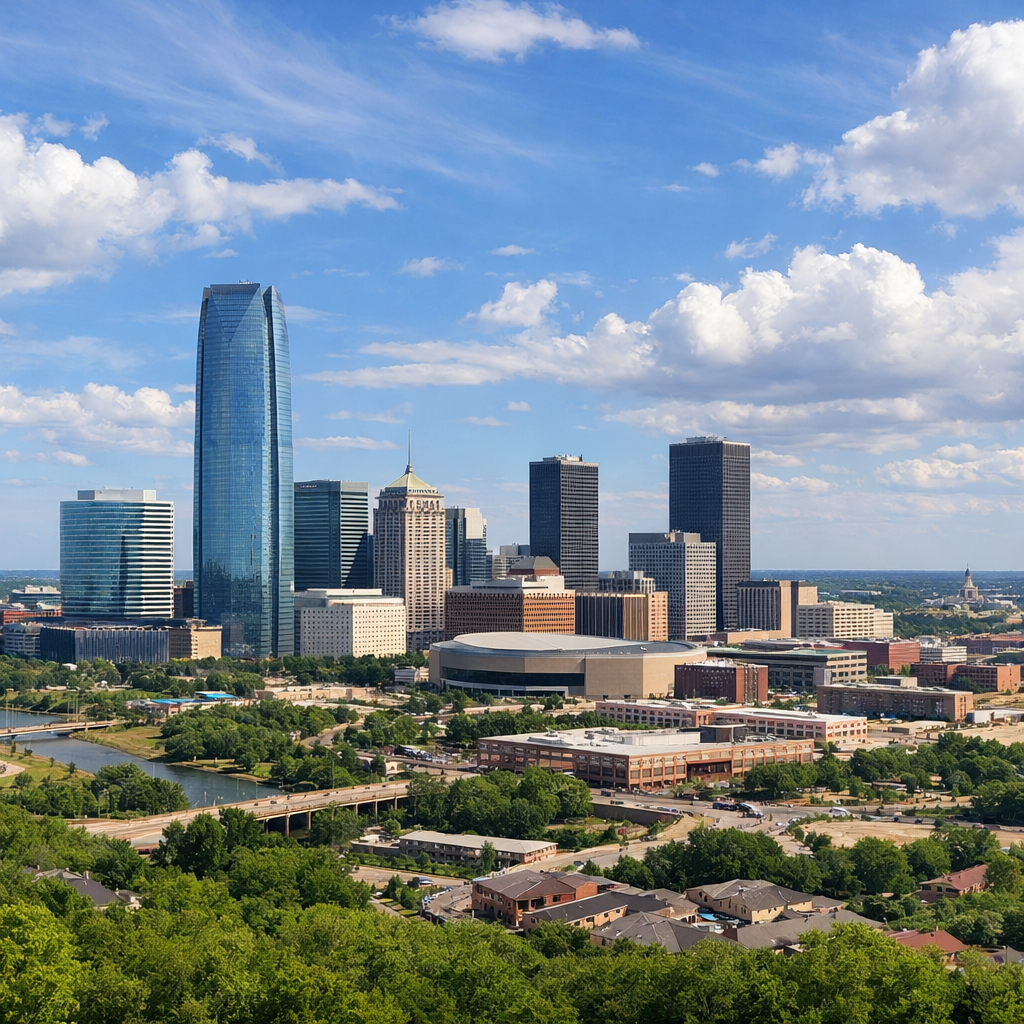
Oklahoma City experiences a diverse range of weather patterns throughout the year, influenced by its geographic location and topography. Understanding these patterns is essential for residents to prepare for seasonal changes and address environmental challenges.
Seasonal Weather Patterns
Oklahoma City has a temperate humid subtropical climate, characterized by hot, humid summers and cool winters. The average annual temperature is approximately 61.4°F (16.3°C). Summers, particularly from June to August, are hot and muggy, with average high temperatures around 93°F (34°C). Winters, from December to February, are cold and windy, with average lows around 30°F (-1°C). The city receives about 36.52 inches (92.7 cm) of precipitation annually, with May and June typically being the wettest months. Snowfall is relatively light, averaging less than 10 inches (25 cm) per year.
Severe Weather Events
Situated in the heart of “Tornado Alley,” Oklahoma City is prone to severe weather events, especially during the spring and early summer months. The city’s location allows for the convergence of warm, moist air from the Gulf of Mexico and cold, dry air from Canada, creating conditions conducive to thunderstorms and tornadoes. Residents should remain vigilant during these periods and stay informed about weather forecasts.
Environmental Challenges
Air Quality
Air quality in Oklahoma City is influenced by various factors, including emissions from motor vehicles, industrial activities, and natural sources like wind-blown dust. The city has experienced periods where air pollution levels approach or exceed national standards, particularly concerning ground-level ozone and particulate matter. These pollutants can have adverse health effects, especially for vulnerable populations such as children, the elderly, and individuals with respiratory conditions.
Urban Heat Island Effect
The urban heat island (UHI) effect is a phenomenon where urban areas experience higher temperatures than their rural surroundings due to human activities and infrastructure. In Oklahoma City, the UHI effect contributes to increased energy consumption, elevated emissions of air pollutants, and adverse health outcomes. Mapping and understanding the UHI effect are crucial steps toward developing mitigation strategies, such as increasing green spaces and implementing heat-reducing urban designs.
Conclusion
Oklahoma City’s diverse climate and environmental challenges necessitate a proactive approach to weather preparedness and environmental stewardship. By staying informed about seasonal weather patterns and addressing environmental issues like air quality and the urban heat island effect, residents can contribute to a healthier and more resilient community.